To make a houseplant potting mix, combine a moisture-retentive base with coarse ingredients that preserve air space, then adjust the balance for the plant, pot and watering conditions. Do not dig up garden soil or expect one fixed recipe to suit every plant. A useful mix must hold enough water without remaining dense and airless around the roots.
Potting mix is not ordinary garden soil
What fills an indoor pot is more accurately called a growing medium or substrate. In open ground, worms, weather and a large soil volume help maintain structure. A container is a small, enclosed environment. Garden soil can compact in it, restrict airflow and carry weeds or other unwanted organisms indoors.
A commercial houseplant mix is therefore a better starting point than soil from the garden. It can be used as supplied or amended with bark, perlite or pumice. The important properties are water retention, air space and physical stability; the balance varies between plants, so there is no universally correct ratio. The RHS overview of houseplant growing media explains these functions and the need to match the medium to the plant.
Drainage is not simply water leaving the bottom hole. It also means that, after excess water escapes, the substrate still contains air-filled spaces. A mixture can drain at first yet remain saturated in its finer layers.
What each ingredient contributes
Peat-free multipurpose mix: This is a convenient base containing organic material and usually some nutrients. Read the label: products differ, and “peat-free” describes the absence of peat rather than one standard formula.
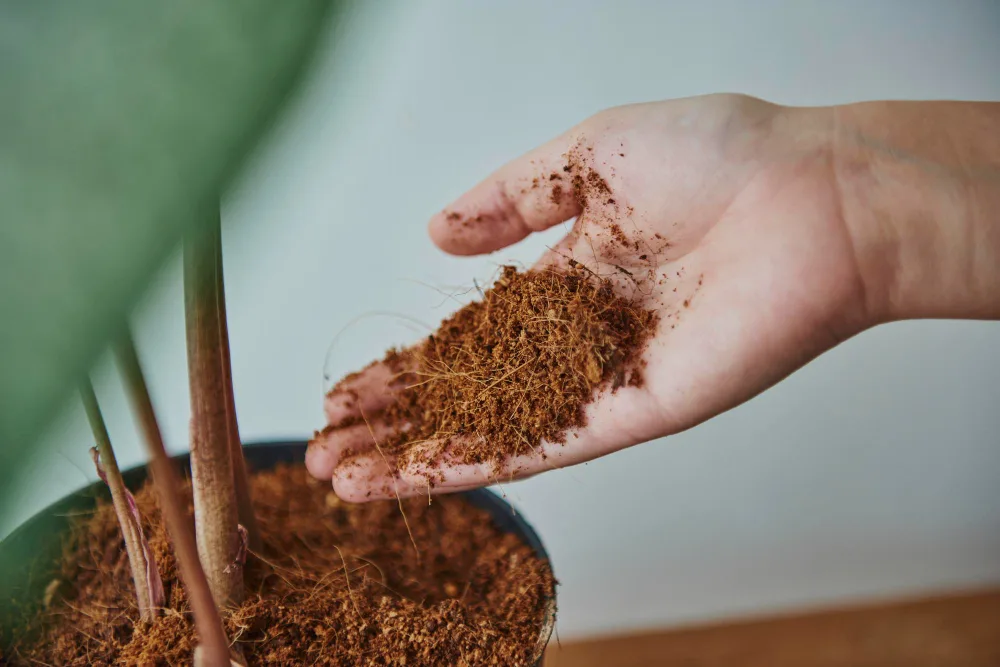
Coir: Coir holds moisture and helps form the base of a mix. Compressed blocks must be hydrated and loosened thoroughly. Because it is moisture-retentive, coir alone is not automatically an airy mix.
Fine or composted bark: Bark introduces coarser structure and suits plants that benefit from air around their roots. Very large pieces may leave an unstable mixture around small roots, while material that has decomposed heavily behaves more like the fine base.
Perlite and pumice: These porous mineral amendments help keep the substrate open. Perlite is light and may float towards the surface during watering; pumice is heavier and can make a tall pot more stable. Neither substitutes for a drainage hole.
Mature, screened compost: A modest amount can add organic matter and nutrients, but a rich, fine compost may make an indoor mix dense. Its quality and salt content can vary, so it is better treated as an amendment than the entire substrate.
Adapt the mix rather than relying on a fixed ratio
Use a packaged peat-free houseplant medium as a base and adjust it according to the plant and conditions. A coarser amendment may help maintain air space, while more moisture-retentive material may suit a mix that dries too quickly. Different plants need different growing media, so follow plant-specific guidance and the product label rather than treating one ratio as universal.
A moisture-loving foliage plant still needs oxygen at its roots. Conversely, a drought-tolerant plant needs a medium that can be wetted evenly when watered, not a dust-dry mixture from which water immediately runs down the pot wall. For example, aglaonema is generally suited to warm, sheltered indoor conditions, indirect light and a well-drained medium, according to the RHS plant profile. “Well drained” does not mean keeping it permanently dry.
Mix and assess the substrate before potting
- Choose a clean container with an open drainage hole. Match its size to the root ball rather than adding a large reserve of empty wet substrate.
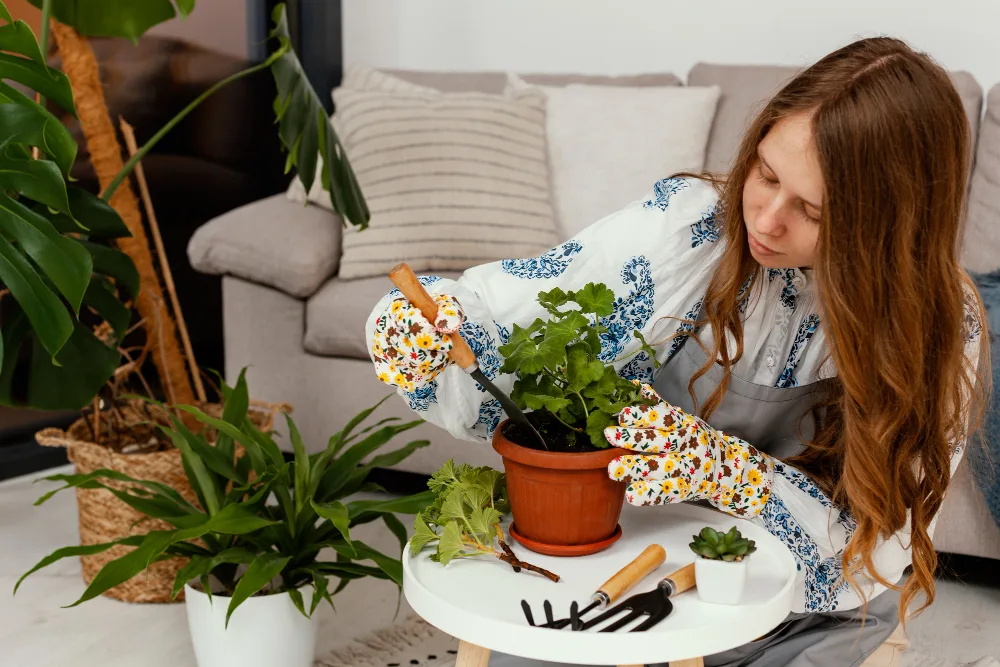
- Measure by volume. Wearing gloves and lightly dampening dusty ingredients can make handling easier.
- Break up compressed material. Remove compact clumps and distribute fine and coarse ingredients evenly without crushing them.
- Test a handful. Moisten it, squeeze gently and release. It should hold together briefly but crumble when touched. A sticky, solid lump suggests too many fines; a mix that cannot retain any moisture may be too coarse for the plant or room.
- Pot without forceful compression. Tap the container and settle mix around the roots. Hard packing destroys the air spaces you created.
- Water thoroughly once. Let excess water leave freely, then review how evenly the mix wets and how its drying rate changes over subsequent waterings.
Why gravel at the bottom does not improve drainage
Do not create a gravel, pebble or pottery-shard “drainage layer” beneath the substrate. It reduces the useful root volume and does not turn a dense mix into a free-draining one. Water movement is interrupted where the fine medium meets the coarse layer, so the wetter zone may simply sit higher in the pot.
Use one consistent, appropriately structured substrate from top to bottom. Cover a large hole with a loose piece of mesh only when necessary to stop mix escaping; do not seal it. The effective combination is an open hole, a suitable pot size and a mix containing durable air spaces.
Adjust the mix to the room and your habits
Plant identity is only one variable. Pot material, pot size and room conditions can affect how quickly the mix dries. A large pot dries more slowly in its centre than a small one. Low light, cool temperatures and weak air movement also extend drying time, while warmth and active growth can shorten it.
If a plant repeatedly remains wet for too long, first confirm that the hole is open and the outer cover pot contains no standing water. Then consider a smaller container or more coarse amendment. If the root ball becomes dry almost immediately and the plant wilts, increase the moisture-retentive base or choose a less porous pot. Also reconsider your watering method with this guide to checking moisture and pot weight.
Yellow leaves, stalled growth or soft roots do not prove that the recipe alone is wrong; watering, light, temperature, pests and root condition can produce overlapping symptoms. Treat the mix as part of a system. The best recipe is the one that gives a particular plant enough moisture and root aeration under the conditions in your home.