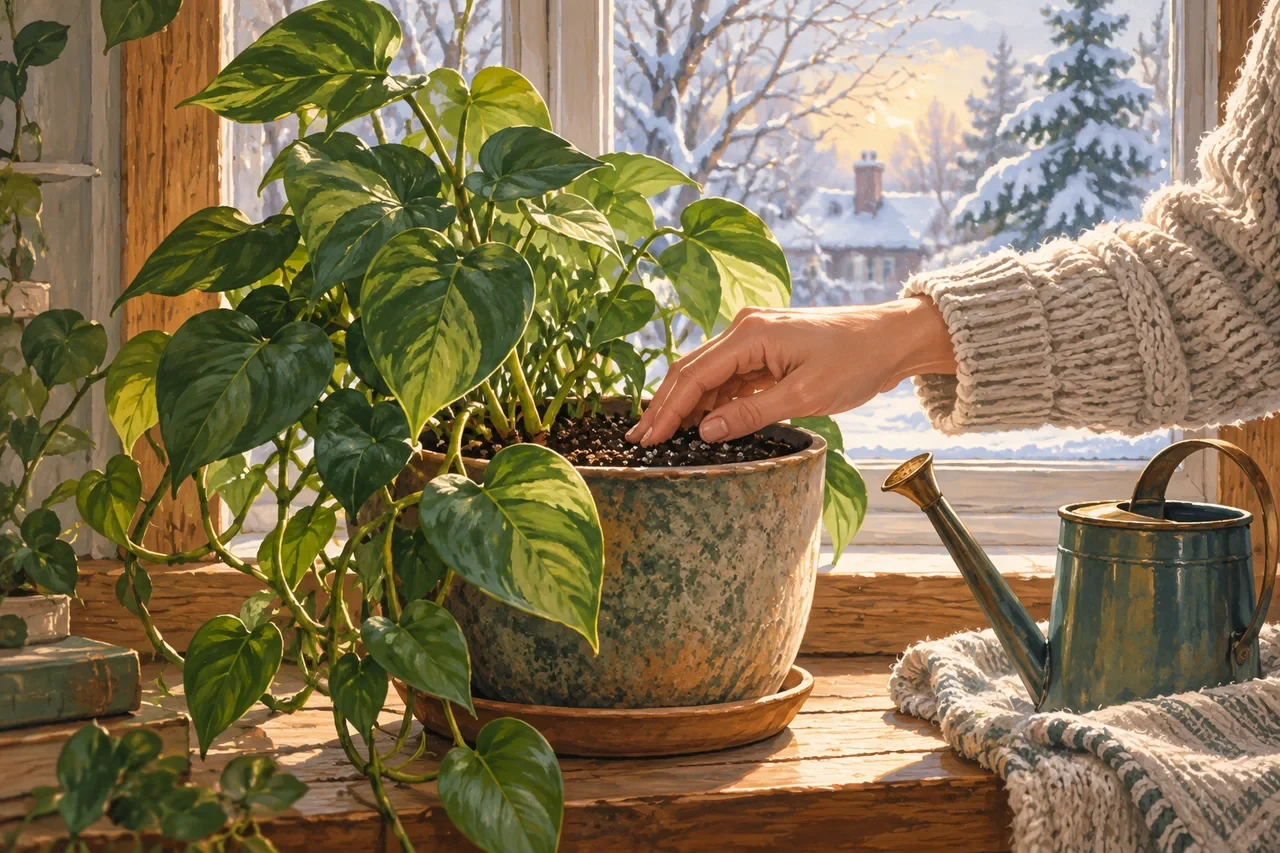
Illustrative editorial image generated with AI.
Many houseplants need watering less often in winter because lower light slows growth and the potting mix can remain wet longer. The calendar alone is not the cause. A plant under a grow light in a warm room may behave differently from the same species beside a dim, cold window.
Lower light changes the balance
Water supports growth and is also lost through leaves and from the potting mix. When growth slows and conditions reduce water loss, repeating a summer watering routine can keep roots wet for too long. The RHS guide to struggling houseplants identifies overwatering, poor light and dry indoor air as common winter problems.
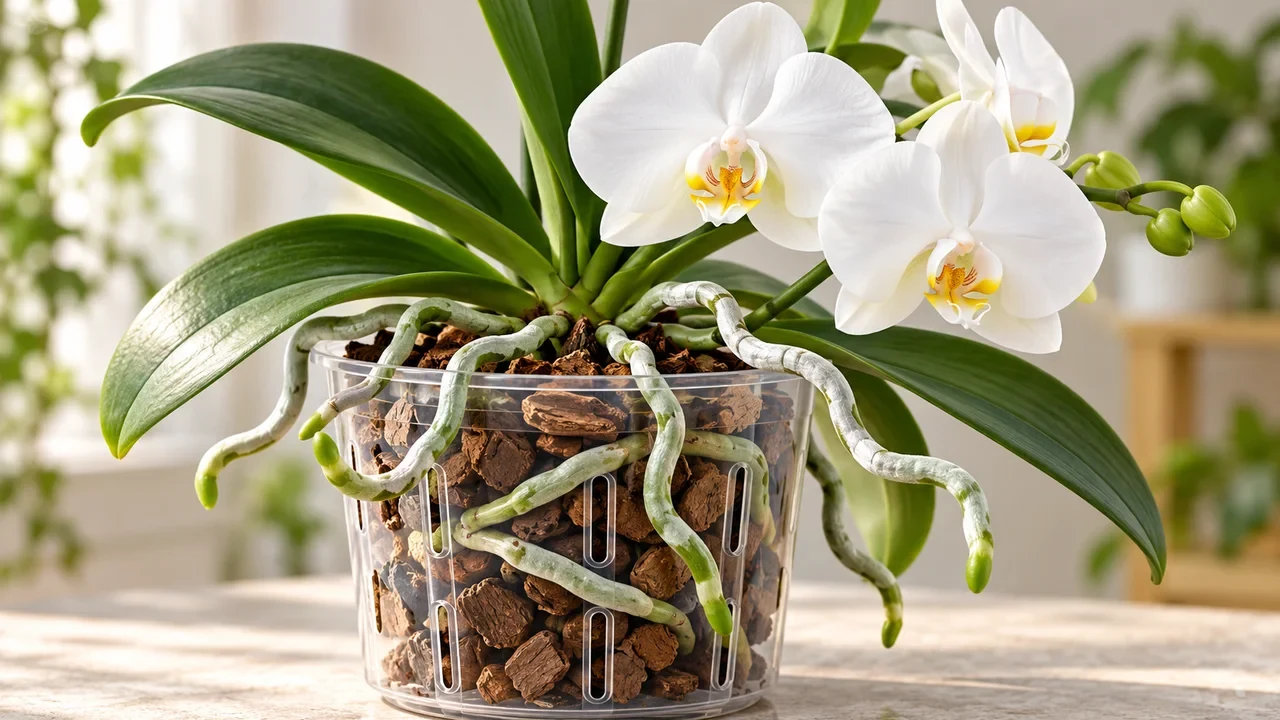
This does not mean every indoor plant enters complete dormancy or should stay dry all winter. Species, pot size, rooting, light and room conditions still matter. A small terracotta pot can dry very differently from a large plant inside an impermeable decorative container.
Check the root zone before reaching for the jug
Use a finger or a clean wooden stick to assess moisture below the surface, taking care around roots. Lift the pot when practical and learn the difference between its recently watered and drier weight. A dry-looking surface does not prove that the lower half of a deep pot is dry.
Apply the drying interval appropriate to the species. A fern and a succulent should not share one rule. If the mix is still moist where the plant's roots are, postpone watering and check again. A reminder can prompt inspection, but it should not automatically mean adding water.
Water thoroughly when it is needed
For plants grown in ordinary draining potting mix, wet the root ball evenly and let excess water escape. Empty the saucer or outer pot after drainage. Repeated little splashes can leave some roots dry while other areas remain wet. Mississippi State Extension's care guide recommends avoiding rigid watering schedules and using water near room temperature.
A hot room can still create local problems
Radiator heat or a ventilation outlet can dry a plant unevenly. Dry air around leaves is not proof that the pot needs more water. Move plants away from direct hot or cold blasts, and keep foliage from touching cold glass. Illinois Extension explains why indoor humidity and temperature deserve separate attention.
Reassess as conditions change
Yellow leaves or drooping can have several causes; do not diagnose thirst from appearance alone. Check moisture and drainage first. Adjust feeding to active growth and the product instructions rather than using fertiliser to compensate for poor light. As spring light increases and new growth resumes, inspect more often and let the plant's drying pattern guide the next change.