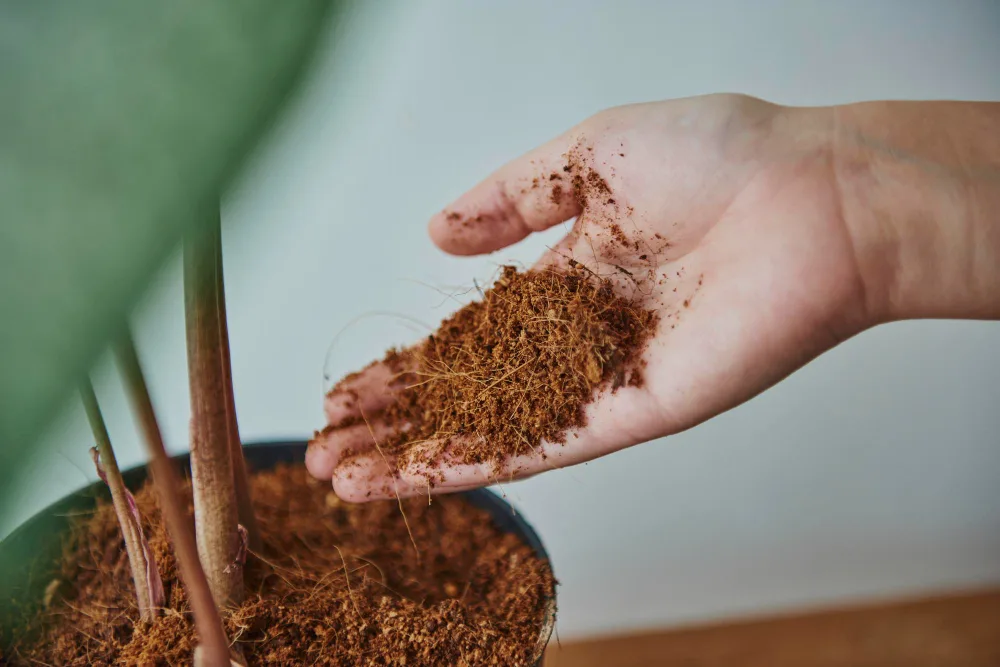
Chinese evergreen leaves may turn yellow when the roots remain wet too long, but dryness, cold, harsh light, pests and normal leaf ageing can look similar. Do not respond to every yellow leaf with more water or fertiliser. First inspect the pattern of yellowing, then check the growing medium and roots, followed by temperature, light and pests. A single older lower leaf is usually less concerning than several yellowing leaves accompanied by soft stems or a sour-smelling mix.
Start with the yellowing pattern
The location and speed of the change narrow the possibilities. One of the lowest, oldest leaves may yellow evenly before dropping as the plant replaces old growth. If new leaves remain firm and growth continues, remove the spent leaf only when it comes away easily or cut it with clean scissors.
Several yellow leaves appearing within a short period call for investigation. Soft yellow lower leaves and persistently damp growing medium suggest root stress from excess moisture. Dry, crisp margins alongside drooping foliage point more toward insufficient water, very dry air or concentrated salts. Pale areas on the side facing a bright window can indicate excessive direct sun. Yellow stippling, distorted new growth, webbing or sticky residue warrants a pest inspection.
| What you see | Check first | Avoid |
|---|---|---|
| One old lower leaf yellows slowly | New growth and overall firmness | Changing the entire routine immediately |
| Several soft yellow leaves | Moisture, drainage holes and roots | Watering by the calendar |
| Yellowing after a cold night | Window glass, draughts and temperature shifts | Leaving damaged leaves against cold glass |
| Pale or bleached window-facing patches | Direct sun exposure | Moving the plant into deep darkness |
| Yellow speckles or sticky leaves | Leaf undersides, joints and new growth | Fertilising before checking for pests |
Check moisture before adding water
Touching only the surface can mislead you: the top may feel dry while the centre remains saturated. Insert a finger or a plain wooden skewer several centimetres into the mix. Also lift the pot and compare its weight with the weight after a thorough watering. Over time, this gives a more useful signal than a fixed weekly schedule. Our guide to finger testing and pot weight explains how to build that reference.
If the mix is still damp, postpone watering and empty any water trapped inside the decorative outer pot. When watering is actually due, wet the medium evenly until surplus water exits the drainage holes, then let it drain. Repeated tiny sips can leave some roots dry while salts accumulate elsewhere.
A dry plant and a waterlogged plant may both droop, so drooping alone is not a diagnosis. The difference is in the medium and tissue: dehydration commonly comes with a light pot and dry mix; prolonged saturation often produces a heavy pot, soft yellowing and sometimes an unpleasant smell.
Inspect drainage, roots and potting medium
If yellowing continues despite careful watering, slide the root ball out gently. Healthy roots are generally firm. Dark, mushy roots that shed their outer layer easily are consistent with decay. Remove clearly dead material with clean tools, but do not strip every particle of mix from healthy roots or move the plant automatically into a much larger pot.
A drainage hole is essential, yet it cannot compensate for a dense, collapsed medium or an oversized pot that stays wet for too long. Houseplant-medium ingredients affect water retention, aeration and physical stability, and no single recipe suits every plant, as the RHS overview of growing media notes. For Aglaonema, aim for a loose, well-drained medium that still holds moderate moisture rather than becoming either swampy or dust-dry.
Repot only when there is a reason: decomposed medium, damaged roots, blocked drainage or a root ball that dries implausibly fast. Choose a pot only slightly wider than the viable root mass. After removing rotten roots, an oversized container merely surrounds a smaller root system with more wet medium.
Review temperature and light next
Chinese evergreen prefers warm, sheltered indoor conditions and indirect light; the RHS plant profile for Aglaonema modestum also specifies a well-drained medium. Place the plant away from cold draughts, frequently opened winter doors and leaves touching chilled glass. Sudden temperature changes can matter even when the room generally feels comfortable.
Low light does not always yellow leaves directly, but it slows water use and makes an unchanged watering schedule risky. Conversely, strong direct sun may bleach or scorch exposed areas. Move the plant gradually to bright, filtered light rather than making an abrupt switch from a dark corner to a sunny sill.
Rule out pests and feeding errors
Use a phone torch or bright daylight to inspect both sides of every leaf, the petioles and tightly folded new growth. Look for fine webbing, pale stippling, brown bumps, cottony deposits and sticky honeydew. Isolate a suspicious plant from nearby pots while identifying the pest; wiping leaves can reduce visible insects but may not complete treatment.
Do not use fertiliser as first aid for a stressed plant. Excess fertiliser can damage roots and produce brown tips or marginal yellowing, especially when evaporation leaves salts behind. If you suspect buildup and the roots are otherwise sound, flush the medium thoroughly with water and allow it to drain. Resume a suitably diluted houseplant feed only during active growth and only after moisture, roots and pests are under control.
A practical ten-minute checklist
- Count affected leaves: one old leaf or a spreading pattern?
- Feel the tissue: firm, crisp, limp or mushy?
- Check below the surface: is the inner medium damp or dry?
- Lift the pot: unexpectedly heavy or unusually light?
- Inspect drainage: open holes and no standing water in the cover pot?
- Smell and view the roots if needed: firm roots or dark, soft decay?
- Recall recent changes: cold night, relocation, repotting or altered watering?
- Assess light: direct midday sun, deep shade or bright filtered light?
- Inspect for pests: especially leaf undersides and new growth.
- Change one major variable: then observe new growth instead of expecting yellow tissue to turn green.
Already-yellow tissue usually does not recover its green colour. Judge the correction by whether yellowing stops spreading and subsequent leaves emerge healthy. Avoid combining repotting, relocation, heavy pruning, pesticide and fertiliser on the same day unless severe rot or an active infestation makes immediate intervention necessary.
Wear gloves if your skin is sensitive, keep cut material away from children and pets, and wash tools after pruning. Aglaonema sap and ingestion can be harmful, so fallen leaves should not be left where they can be chewed.