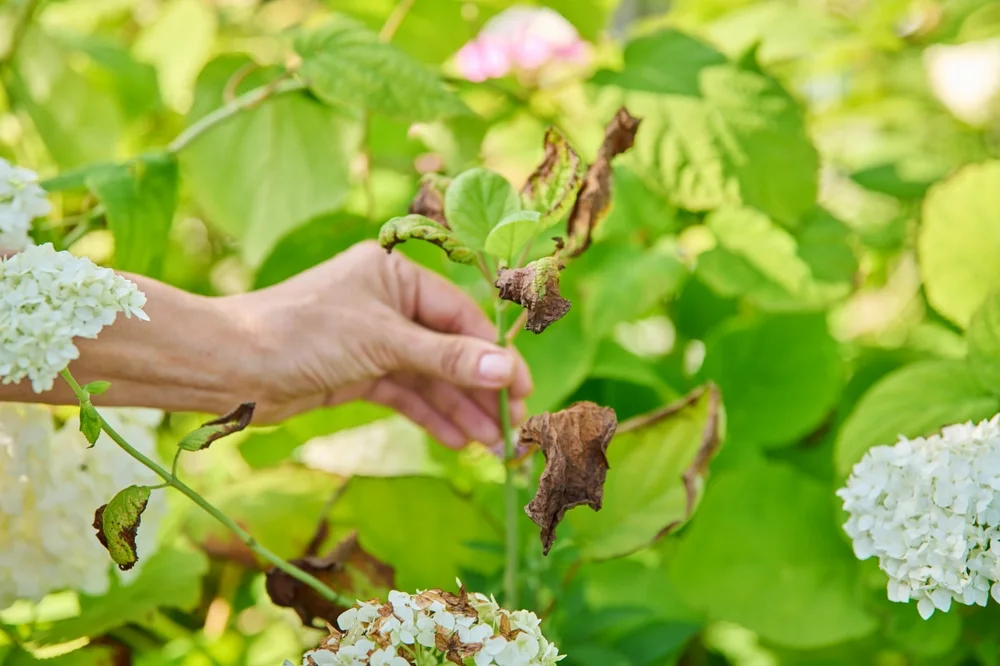
Humidity matters to some houseplants, but a brown leaf tip is not a diagnosis or an automatic reason to buy a humidifier. Root-zone moisture, hot drafts and watering patterns also deserve inspection. Identify the condition that changed, then test one intervention while keeping notes.
Air humidity and water in the pot are different
Relative humidity describes the air; watering supplies the root zone. Humid air does not water a dry pot, and extra watering does not reliably fix a dry room. Confusing them can leave compost wet for too long while the leaf problem continues.
Consider the species. A fern and a cactus do not need an identical humidity target. University horticulture guidance highlights dry winter conditions and protection from heating and air-conditioning outlets. There is no single mandatory percentage for every plant.
Use a humidity meter consistently
Place the meter near the plant without touching foliage and away from the humidifier's direct output. Record morning and evening readings in the same location for several days. Observe what happens with heating on, after ventilation and with the device switched off. Look for a repeated condition rather than interpreting one reading in isolation.
If leaf tips deteriorate while the pot remains wet for days, widen the investigation. Examine watering frequency, drainage and root condition instead of concentrating only on air humidity. Judge subsequent growth rather than expecting already damaged tips to turn green again.
Why misting is not a lasting solution
Iowa State Extension explains that misted foliage dries quickly and misting is not an effective way to raise relative humidity. Briefly wet leaves do not show that the plant experiences humid air all day. Do not make spraying a default routine, particularly for plants with fuzzy leaves.
Run a small humidifier trial
Clean the appliance according to its instructions and position it so it does not directly wet leaves, walls or furniture. Keep measuring in the same place. If windows collect condensation, surfaces become wet or mold appears, stop increasing humidity and assess the room's ventilation and moisture conditions.
Grouping plants may affect their immediate surroundings, but leave room for care. If using a pebble tray, keep pot bases above the water. Measure the result instead of assuming a particular method changes the whole room.
A one-week checklist
- Record the species and location.
- Note pot moisture separately from air humidity.
- Remove direct hot or cold drafts.
- Change one condition and monitor it for several days.
- Review new growth and moisture on surrounding surfaces.
References: Maryland Extension temperature and humidity guidance, Iowa State on misting, and controlling moisture problems at home.