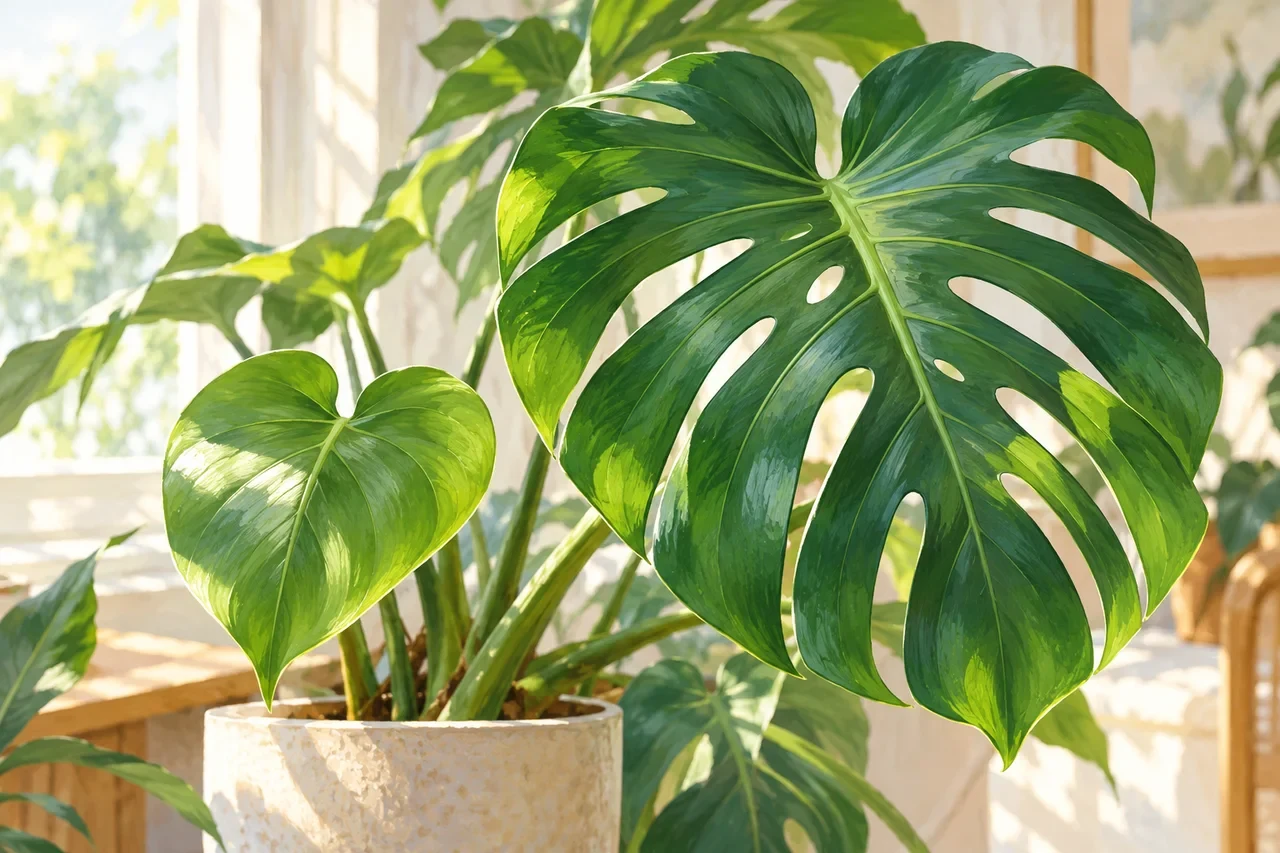
Illustrative editorial image generated with AI.
A Monstera without holes is not automatically unhealthy. Young Monstera deliciosa commonly produces smaller, entire leaves before developing the splits and holes associated with mature plants. The useful clues are the plant's identity, the size and quality of its new growth, and the conditions in which it is growing.
Start with the species and growth stage
Fenestration means the natural openings that develop in a leaf. Different Monstera species have different leaf shapes, so a photograph of a mature specimen is not a deadline for a newly rooted cutting. The RHS Monstera guide notes that young plants generally lack the characteristic holes.
An intact leaf that has already expanded will not later redesign itself into a mature, deeply divided leaf. Judge the next leaves instead. If older leaves have splits but a new shoot starts smaller, consider that shoot's development and conditions rather than cutting holes into the leaf.
Give the plant usable light
Monstera is a climbing forest plant, but that does not make a dark corner ideal for strong indoor growth. Provide bright, indirect light and observe the plant over successive leaves. Move it gradually when changing exposure; suddenly placing shade-grown foliage in strong direct sun can cause damage.
Assess the actual position, including distance from the window, nearby buildings and winter daylight. A room that looks bright to your eyes can still leave the plant far from useful natural light. Longer stems and progressively smaller leaves are reasons to review the growing setup, though no single symptom proves a light problem.
Support growth without promising a shortcut
A stable stake or suitable climbing support helps organise a maturing plant and carry its weight. Secure the main stem gently without trapping or tightly tying the moving leaf stalks. Support is part of the growing environment, not a guaranteed switch that creates holes in the next leaf.
University of Minnesota Extension describes Monstera's climbing habit and the need for a node when propagating. A detached leaf without a viable node is not a reliable route to a new climbing plant.
Check roots and watering before adding fertiliser
Use a draining container and allow the appropriate drying interval between waterings. Persistent wetness, a pot sitting in runoff or damaged roots can limit growth. Fertiliser cannot replace light or repair waterlogged roots; follow the product directions during active growth instead of increasing the dose to chase larger holes.
The New York Botanical Garden's guide covers watering, support and seasonal care. Photograph new leaves from the same angle and note their size over time. Healthy, steadily enlarging growth is a more useful target than copying a mature plant's appearance immediately.