
Wilting is not thirst. Root rot is read from too much water, a mix with no drainage or one that stays wet, and soft dark roots together. A healthy root stays firm. In a rescue, the rotten part is removed, a more open mix is chosen, and the old watering pattern is not resumed at once. A pot larger than the roots increases the volume that stays wet.
How to Recognize Root Rot: Overwatering, Drainage and Root Checks
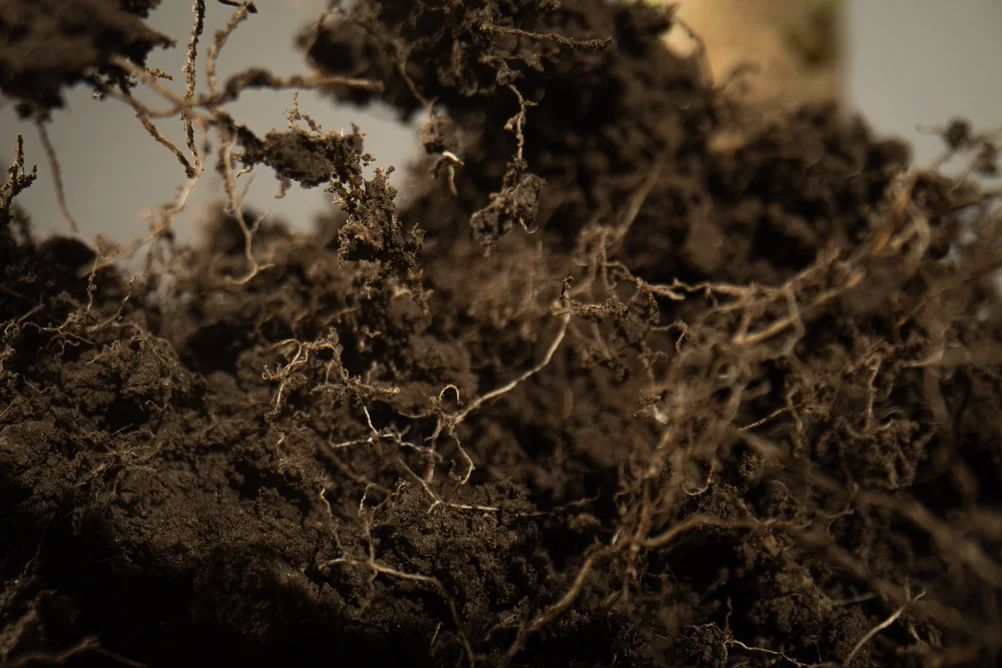
Root rot is recognized from overwatering, drainage and a root check, not from wilt alone.
More to read
-
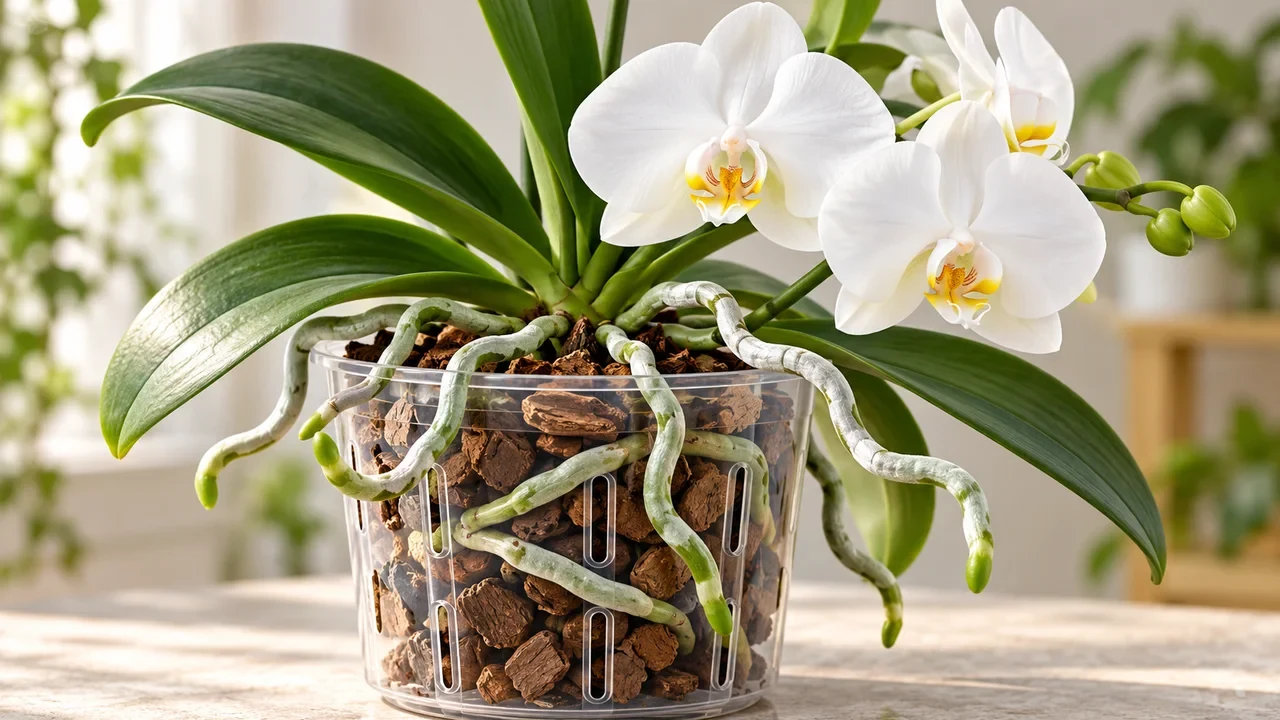
Do Orchids Feed from the Air? What Aerial Roots Actually Do
Understand Phalaenopsis aerial roots, water uptake and potting mix before cutting roots, changing the pot or adding more fertiliser.
-
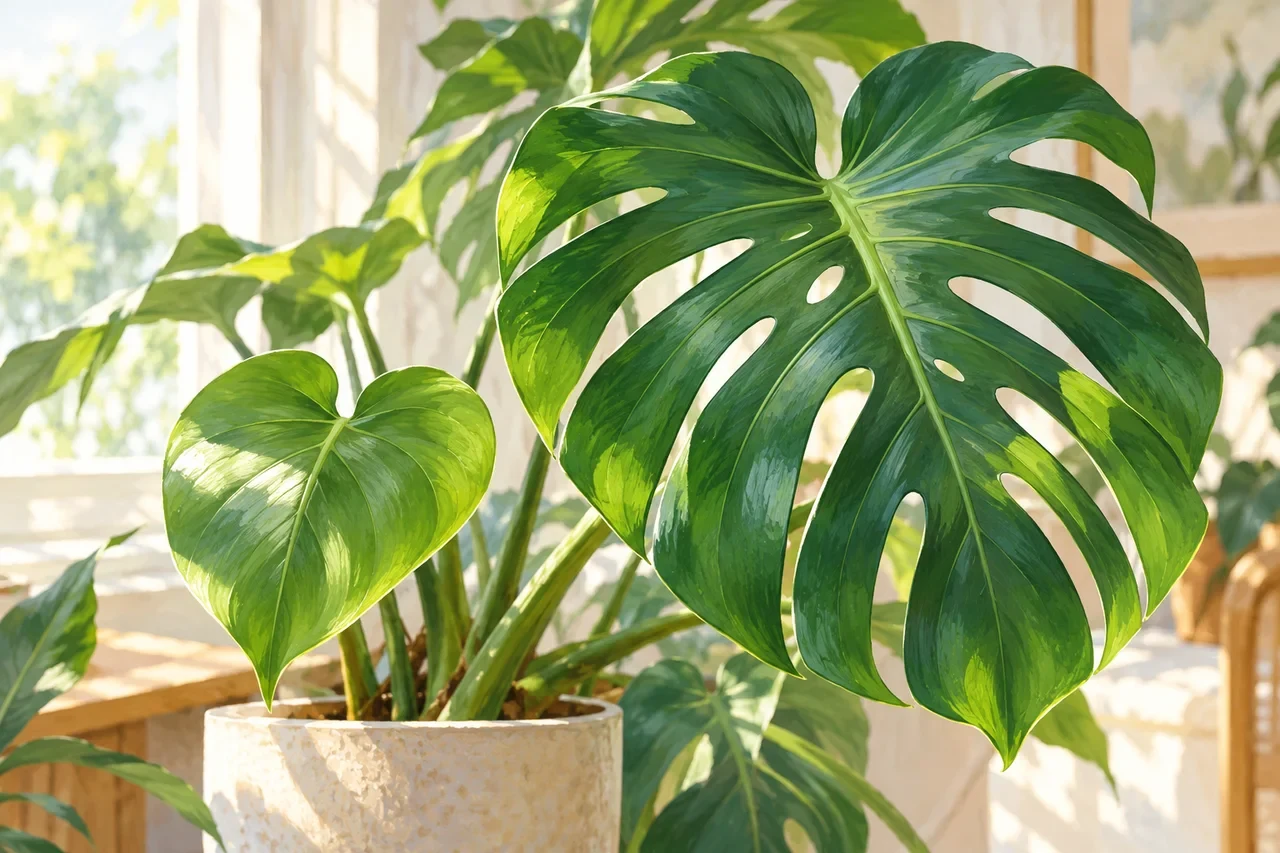
Why Doesn't My Monstera Have Holes? Fenestration, Light and Maturity
Young Monstera leaves may lack holes. Check maturity, light and growing conditions; climbing support helps growth but does not guarantee fenestration.
-
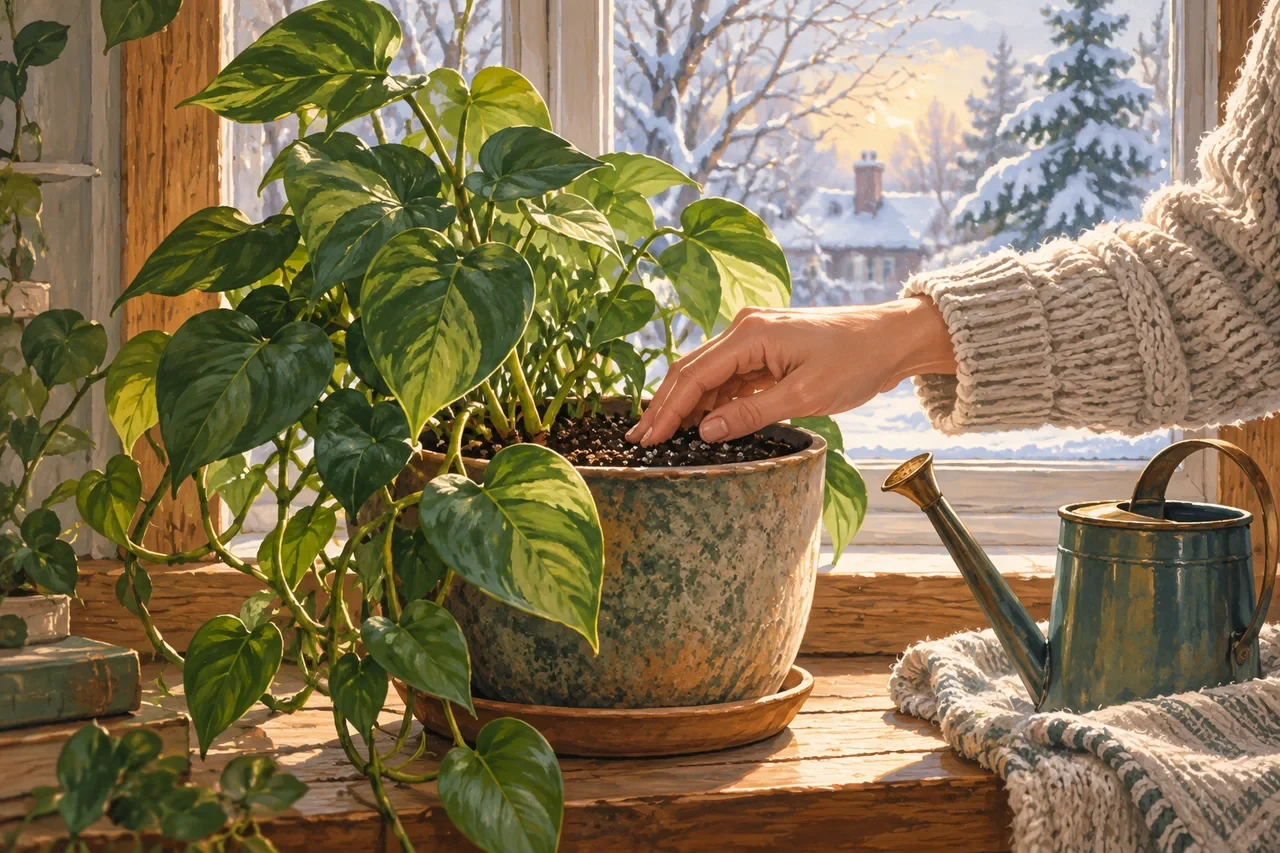
Why Do Houseplants Need Less Water in Winter?
Many houseplants need watering less often in winter. Check light, temperature, growth and the potting mix before changing your routine.
-
Can You Water Plants with Air-Conditioner Condensate? Risks and Practical Considerations
Air-conditioner condensate is not automatically clean irrigation water. Evaluate the collection route, cleaning chemicals, storage and intended use together.
-
How Important Is Humidity for Houseplants? Hygrometers, Humidifiers and Misting
Separate dry air from watering problems, measure humidity near your plants, and test a humidifier without relying on misting or wetting the room.
-
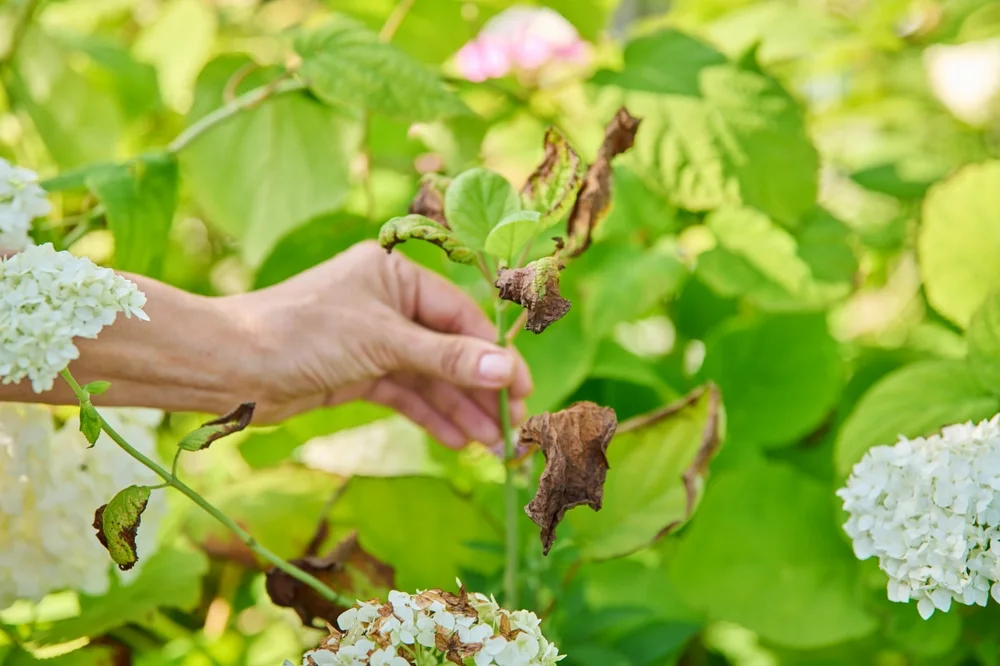
Why Do Leaf Tips Turn Brown? Eight Possible Causes
Brown leaf tips are separated from low humidity through salt buildup, not treated as one disease.